ACME Thunderer Whistle with Cork Pea - 1950s-1970s
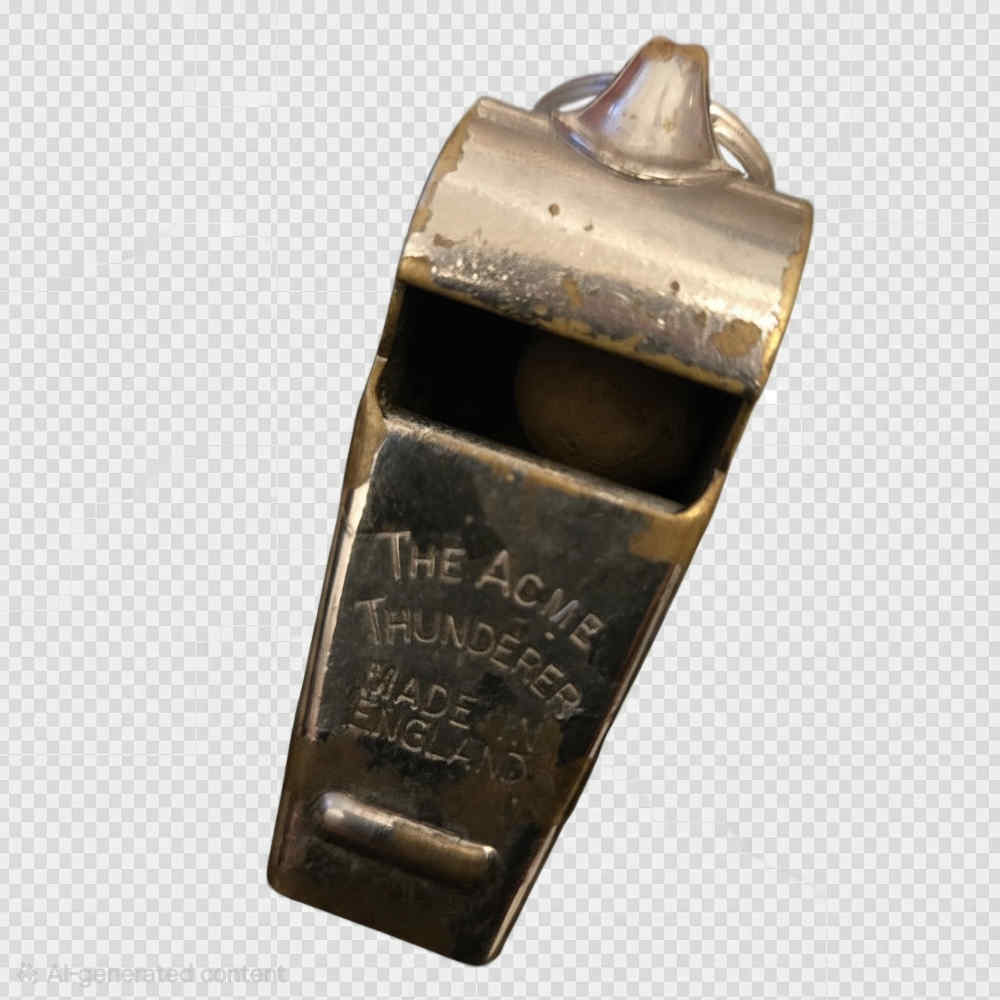
ACME Thunderer Whistle with Cork Pea - 1950s-1970s
This curiosity is available to purchase directly from Sebastians Curios.
Buy Direct →Buy Direct opens your email client with the enquiry ready to send. If you don't have an email application set up, or would prefer to use a different email address, use Copy Email and send it to [email protected].
Type: Whistles
Era: 1950s-1970s
Condition: Vintage Patina/Worn (See Description & Photographs)
About This Curiosity
Vintage ACME Thunderer Whistle with Cork Pea - 1950s-1970s
A genuine vintage ACME Thunderer whistle, dating from around the 1950s-1970s, complete with its cork pea mechanism. It has a lovely worn patina that gives it plenty of character and reflects the years of handling and use it has seen.
The Thunderer is one of Britain's most recognisable whistle designs, originally developed to produce a loud, distinctive sound that could cut through background noise. Whether used on the sports field, for signalling or as part of someone's everyday working equipment, it was a practical little object with an important job to do.
A charming piece of British manufacturing history, ideal for collectors of vintage whistles, sporting memorabilia or unusual pieces of everyday industrial history.
Toys and Collectibles: Sebastian's Curiosities specialises in vintage items and collectibles intended for adult collectors, rather than toys for children. Even where an item was originally marketed as a toy, it is included in our collection because of its vintage or collectible interest. Such items should be treated as collectibles, are suitable for adults only, and should not be purchased for children or left within their reach.
Please read our Buying and Owning Vintage Items Information before making a purchase.
Related Curiosities
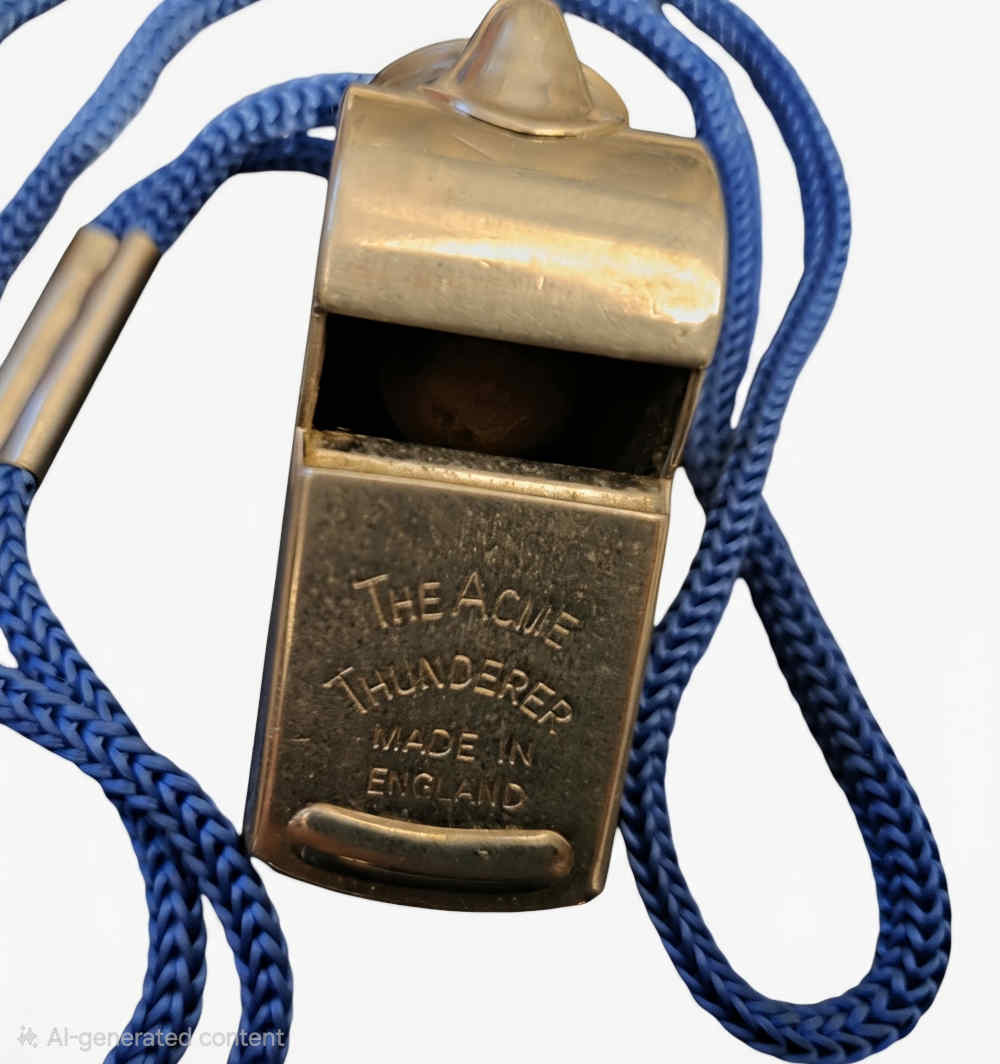
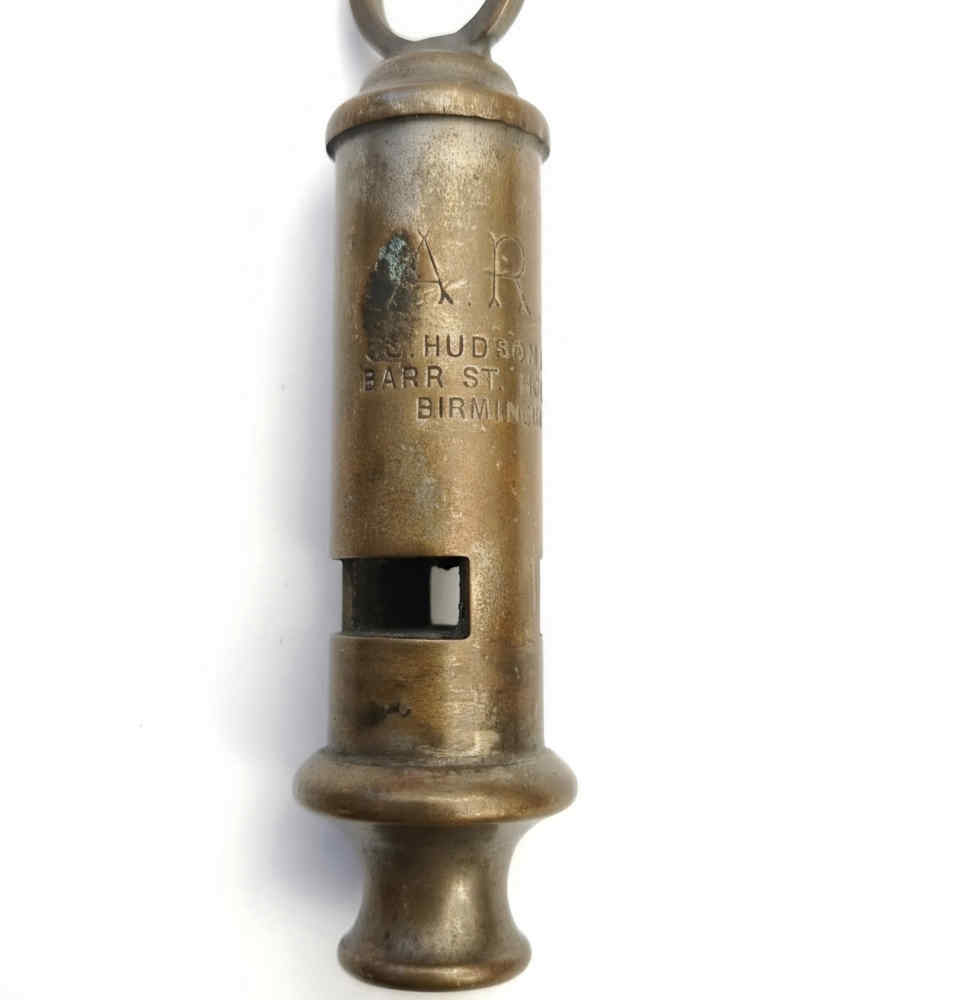
Sebastian's Curiosity
I wonder what this particular whistle might have witnessed during its working life. Perhaps it once hung from the neck of a football referee, ready to bring a lively match to a halt, or maybe it was bought as civilian whistle by a police officer using it to attract attention on a busy street.
It could just as easily have been carried by someone in uniform, used for signalling or giving instructions where a raised voice simply wasn't enough. Of course, we have no way of knowing its actual story, but that's part of the fascination with objects like this. Somewhere along the way, this little whistle had a purpose, and now it has found its way into a new chapter.
The History Behind This Curiosity
The ACME Thunderer has a history stretching back to Victorian Birmingham. Its maker, Joseph Hudson, established his whistle-making business in the city in 1870. A skilled toolmaker and inventor, Hudson recognised that there was a growing need for reliable whistles that could be heard above the noise of busy streets, railway stations and workplaces.
His early success came through supplying whistles for the police. In the 1880s, these offered a much more effective way for officers to raise the alarm than the hand rattles they had previously carried.
In 1884, Hudson introduced the ACME Thunderer, a design that would become particularly popular in sport. It was among the first pea whistles, using a small cork ball inside the chamber to create its characteristic rolling, trilling sound. Football referees adopted the design, and it went on to become familiar across sporting grounds around the world.
The Thunderer was never limited to the football pitch, however. ACME produced whistles for a wide variety of purposes, including signalling and professional use, with designs serving police, military and other working environments.
Remarkably, the ACME Thunderer remains in production today. This example, dating from the mid-twentieth century, is a reminder of how a simple but clever piece of British engineering became an enduring design.