Vintage WWII ARP Air Raid Warden's Whistle - Wartime British History
Vintage WWII ARP Air Raid Warden's Whistle - Wartime British History
This curiosity is available to purchase directly from Sebastians Curios.
Buy Direct →Buy Direct opens your email client with the enquiry ready to send. If you don't have an email application set up, or would prefer to use a different email address, use Copy Email and send it to [email protected].
Type: Whistles
Era: 1940s/WW2
Condition: Used (See Description & Photographs)
About This Curiosity
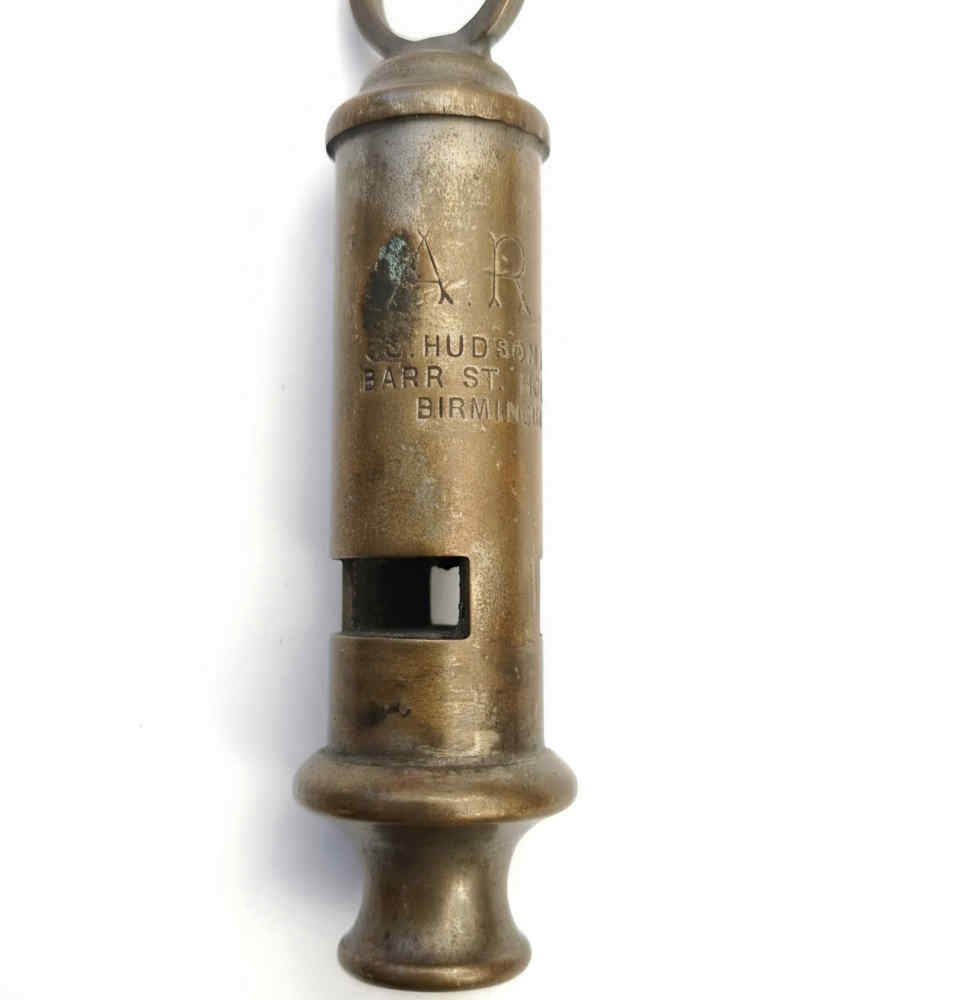
A genuine vintage ARP (Air Raid Precautions) whistle, dating from the Second World War era. This example has plenty of lovely aged patina, giving it an authentic appearance and a real sense of its age and history.
Whistles like this were carried by ARP wardens during the war, forming part of the equipment used to help protect Britain's civilian population during air raids. A simple but important piece of wartime equipment, it would have been familiar on the streets of towns and cities across the country during the blackout years.
With its strong connection to the British Home Front, this is a fascinating little piece of Second World War history, ideal for collectors of militaria, wartime memorabilia and objects from everyday life during the 1940s.
Toys and Collectibles: Sebastian's Curiosities specialises in vintage items and collectibles intended for adult collectors, rather than toys for children. Even where an item was originally marketed as a toy, it is included in our collection because of its vintage or collectible interest. Such items should be treated as collectibles, are suitable for adults only, and should not be purchased for children or left within their reach.
Please read our Buying and Owning Vintage Items Information before making a purchase.
Related Curiosities
Sebastian's Curiosity
I find myself wondering about the person who might once have carried this whistle. Could it have belonged to an ARP warden during the Blitz, perhaps hanging from a lanyard around their neck as they went about their duties on the streets of a British town or city?
Imagine the responsibility they carried. As families hurried into shelters and the sound of approaching aircraft filled the night sky, ARP wardens were heading towards the very places others were desperately trying to escape. They patrolled the blacked-out streets, checked that homes were properly covered, directed people to safety and, when the bombs fell, went into damaged buildings and burning streets to help those trapped or injured.
These were ordinary people, many of them volunteers, who could find themselves working beneath falling masonry, surrounded by fires or in streets still under attack. They didn't have the luxury of simply waiting for the danger to pass. Someone might be trapped in a collapsed house, a fire might be spreading or a neighbour might desperately need help. And the wardens went in, often not knowing what they would find.
I wonder whether this little whistle was ever blown during one of those terrifying nights. Perhaps its sharp call rang out through the blackout, cutting through the noise of an air raid as its owner tried to guide people away from danger or summon assistance. Could it have sounded among the ruins of a bomb-damaged street, where homes that had stood for generations were suddenly reduced to rubble?
Perhaps, after the all-clear sounded, its owner would have continued their rounds, checking on residents, helping families whose homes had been destroyed and making sure nobody had been left behind. Then, when morning came, they might have returned to their own families, their normal jobs and the everyday business of carrying on.
Of course, we cannot know whether this particular whistle saw any of those events, or even who originally carried it. But I find it difficult to look at an object like this without thinking about the people who relied on it, and the extraordinary courage shown by those who served as ARP wardens. They were not distant figures in a history book. They were ordinary members of their communities who put themselves in harm's way to protect their neighbours.
And perhaps that is what makes this little whistle so interesting. It is easy to see it simply as an old piece of metal, worn by time, but it may once have been carried by someone who faced extraordinary danger simply because somebody needed help. I wonder what stories it could tell if only it could speak.
Help Us Preserve Britain's Memories
Did you have family members who lived through the Second World War? Perhaps a grandparent, parent or other relative served as an ARP warden, worked in civil defence, helped during air raids or simply has a story about life on the Home Front.
We would love to hear from you. Whether you have personal memories, family stories, old photographs or details passed down through generations, we'd be delighted to include your contributions in our Preserving Britain's Memories project, helping to keep these important stories alive for future generations.
Have a story to share? Get in touch at [email protected].
The History Behind This Curiosity
The letters A.R.P. stand for Air Raid Precautions, an organisation developed in Britain in preparation for the possibility of aerial attack during another European war. The government had begun making preparations during the 1930s, and the Air Raid Precautions Act of 1937 placed responsibility on local authorities to organise services to protect their communities.
Britain's Other Army on the Home Front
The ARP wardens were just one part of what became Britain's other army - the thousands upon thousands of ordinary men and women who served on the Home Front during the Second World War. Alongside the wardens were rescue parties, firefighters, ambulance crews, first-aid volunteers and many others who faced the dangers of bombing to help protect their communities.
ARP wardens, like those in the Home Guard and other volunteers were often made up from those in the community who were too old or ill to fight or whom were in reserved occupations and therefore unable to fight, the put their lives on the line at home instead. Around 1 in 10 civilian deaths in WW2 belonged to the civil defence or ARP.
Their stories are an important part of Britain's wartime history, and we've explored the people and organisations who made up this remarkable civilian force in our article:
Britain's Other Army on the Home Front - The Men and Women Who Defended Britain
When war broke out in September 1939, ARP wardens became a familiar sight throughout Britain. They were part of a much wider civil defence network, working alongside firefighters, rescue teams, ambulance crews, first-aid parties and other emergency services. Their job was to help protect ordinary people from the dangers of enemy bombing.
One of their best-known responsibilities was enforcing the blackout. Once darkness fell, no light was allowed to escape from homes, shops, factories or other buildings. Even a small gap in a curtain could potentially help enemy aircraft identify a target below. Wardens patrolled their allocated streets, calling out warnings such as "Put that light out!" whenever they spotted a visible light.
But their duties went far beyond checking curtains. During air raids, wardens helped direct people towards shelters, kept streets clear for emergency vehicles, reported bomb damage and assisted rescue services. They might help tackle fires caused by incendiary bombs, provide first aid, guide people away from dangerous buildings or help residents whose homes had been destroyed.
The ARP whistle was a small but useful part of their equipment. Usually carried on a chain or lanyard, it allowed a warden to attract attention in an emergency, particularly when shouting might be drowned out by explosions, fires and the general confusion of an air raid. It was not intended to replace the large air raid sirens that gave the general warning of an approaching attack, but it provided wardens with a means of communicating and getting people to take notice when they needed assistance.
Many of the familiar metal ARP whistles were manufactured by J. Hudson & Co of Birmingham, the company behind the famous ACME range of whistles. The company had already established a reputation for producing police whistles and other signalling equipment, making it a natural supplier for wartime requirements.
As the war progressed, ARP wardens became an essential part of life on the Home Front. They were ordinary men and women, many of them volunteers, who often carried out their duties alongside their normal jobs and family responsibilities. During the Blitz, they faced dangerous conditions, working through nights of bombing and helping their communities deal with the devastation left behind.
The ARP organisation was eventually disbanded after the war in 1946, although many of its responsibilities continued through the Civil Defence services that followed. The whistles, badges, helmets and other pieces of equipment left behind have since become important reminders of the people who served on the Home Front.
This little whistle is a reminder of that remarkable period. A modest piece of metal, perhaps easily overlooked today, but once carried by someone whose job was to help keep their community safe during wartime.